



‘Prove the value’: ITV takes ‘soft approach’ to generative AI ads strategy
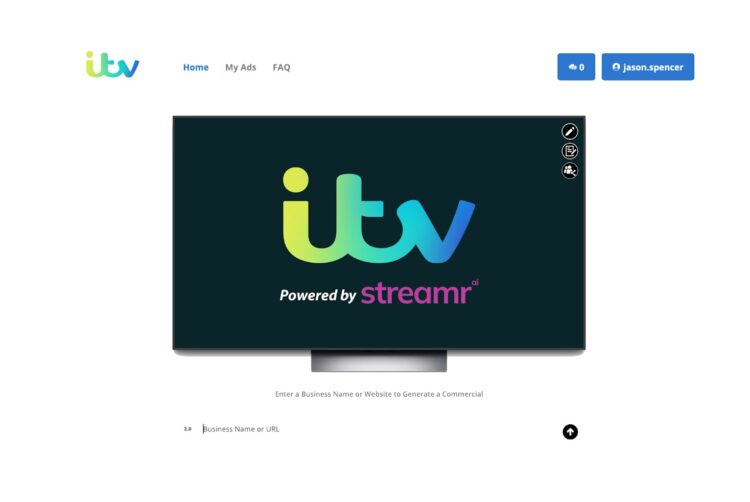
ITV’s approach to using generative AI to create ads on behalf of SMEs has pivoted “a couple of times” in just the last few months since it launched its GenAI Ads Manager product. That is according to Jason Spencer, ITV’s business development director.
Spencer told The Media Leader that while there is “a lot of headroom for growth” through the initiative, ITV has not “made loads of Gen AI ads” to date.
“There are a couple of reasons for that,” he explained. While generative AI ads have been “a great conversation starter” with potential clients, the ITV commercial team has found that conversations still typically start with a brief, rather than a client saying, “I want a gen AI ad”.
Spencer also acknowledged that, in its current iteration, generative AI using enterprise licenses can only “take you so far”.
Instead of churning out a large number of generative AI ads, ITV has instead shifted to integrating AI into its standard workflow, both for its sales teams and for its creative production team, led by Alan Hall. That includes both sales employees crafting AI ads to take into pitch meetings and Hall using AI to assist in brainstorming, storyboarding, or accomplishing otherwise prohibitively expensive shoots.
Spencer told The Media Leader that the creative efficiencies driven by AI have enabled Hall’s team to produce 7% more ads, even after the team underwent a 25% reduction in staff (employees, he clarified, have been reassigned to other roles within the business).
In the immediate pipeline, the broadcaster is developing two new AI-driven advertising features. One is to expand the GenAI Ads Manager not only to create 30-second TV spots but also to generate pause-screen ads, which Spencer indicated have been a growth area for the business.
The second is to use AI to help brands adapt existing social video assets onto ITV’s YouTube inventory. The broadcaster is currently “exploring” this capability.
Targeting digital performance agencies
ITV has been working on generative AI initiatives for ad creative since the autumn of 2024. The consistent aim has been to expand the number of businesses able to buy TV spots from the roughly 7,000 that currently do to more “TV-ready brands” (also referred to by ITV commercial managing director Kelly Williams as “Felt”, or “fat end of the long tail”, brands), of which Spencer estimates there are 40,000 in the UK alone.
These firms, broadly speaking, have between 10 and 49 staff members. They have reached diminishing returns with search and social media marketing efforts, but have some “depth of budget” to start investing in TV. Using generative AI can reduce the barrier to entry for these brands.
Spencer, however, indicated that little business has been generated thus far by going directly to these businesses’ marketing teams.
“Where we’ve had the most success today is in digital performance agencies,” Spencer said. “There’s been the greatest appetite there rather than going direct to SMEs.”
The admission suggests that broadcasters’ efforts to attract SMEs to TV by making TV ads easier to create and buy could require a high-effort go-to-market strategy. As Spencer described, “It’s all about identifying those TV-ready business and talking to them at the right time. It’s still probably at a really early stage.”
One campaign ITV has got live using its GenAI Ads Manager was with electronics company Panasonic, which launched a campaign at the end of November.
As Spencer described, Panasonic hadn’t advertised on TV for five years and had been spending the bulk of its marketing budget on paid social, but ITV lured it back to the channel via digital performance agency 26PMX, with the campaign bought through ITV’s self-service addressable ad platform Planet V.
Panasonic, being the “first one out of the box”, exemplifies ITV’s cautious approach to AI tools, ensuring the outputs are “of a quality that we’re happy with”.
The “soft approach”, as Spencer described, has meant ITV has not shoehorned generative AI ads into its wider creative offering, but rather has treated them as an incremental “ancillary service” alongside its creative production team, which already produces 900 to 1,000 ads each year for smaller businesses.
“It’s quite tough, being really frank with you,” Spencer said. “In terms of the scalability, what’s next is about moving from proof of concept to proof of value. Our next stage on this is to say, how can we make sure there’s a payback in this?”
How does GenAI Ads Manager work?
In a demonstration video shared with The Media Leader and presented at December’s Future of TV Advertising Global event in London, Spencer walked through how ITV can create a TV-ready ad spot for a brand in 15 minutes.
To start, the GenAI Ads Manager asks the user to enter a business name or website URL. For example, Spencer used the restaurant brand Blacklock, which has a branch in Manchester. As Spencer described, the AI “goes to find out about the business”, creating an ad with fitting music, voiceovers and taglines based on assets from the brand’s website. This first version of the ad can be created within just 30 seconds.
Users can then make edits, such as changing the images in the frames, the font type, the voiceover accent, the music, and the spoken dialogue. There is also an option to show or hide a QR code.
Once satisfied, users can spend credits to convert the ad’s static imagery into an animated video. In Blacklock’s example, photos of diners are animated to appear as if they’re cutting steak or pouring gravy onto their plates.
Ads can then be checked to see whether they are likely BCAP-compliant, ensuring they meet baseline TV standards.
The entire process can take about 15 minutes. However, because it requires credits, ITV says it will be selective with clients about getting the ad to a place a given brand is content with before animating or making additional versions.
Given that the quality of the AI-generated output is “only a reflection of the assets that you have”, ITV could consider upselling this process by deploying its creative production team to improve the quality of assets, such as by taking more distinctive photos of a given business with the intention of uploading them to the GenAI Ads Manager.
‘Good enough is good enough’
The process is “very scalable”, Spencer said, but the challenge now is getting “TV-ready businesses” to both be aware that it’s an option and to buy it.
“If they used to be able to self-serve on YouTube and Meta, this is our ability to try and compete and have a much more level playing field,” Spencer added.
That could still be an uphill battle: marketers still perceive success through TV as requiring high-quality — and expensive — creative assets.
“Everyone talks about, if you’re going on TV, you need to make a great ad. I don’t think you do,” said Spencer. “These brands that are on social video, they’re not after great ads. They’re after ads that are good enough. And what we’re trying to say is, good enough is good enough.”
In the coming years, Spencer does not see AI TV ads replacing the more expensive, higher-quality, human-made ads that its in-house creative production team makes.
He added that these AI tools are “not here to win awards”.
“We’re here to help someone get on TV. Then, when they build a business and their budgets have increased, they can go to a nice, big creative agency and make a great ad.
“But their first ad does not need to be great.”
Are AI ads the future of TV? With ITV’s Jason Spencer and Alan Hall
Editor’s note: This article has been updated after publication. An earlier version of the article implied AI tools led to staff reorganisation within ITV’s creative production team. However, The Media Leader understands that reorganisation preceded the launch of AI tools.