



‘Sky is a creator’: Sky Media leans into curation on platforms
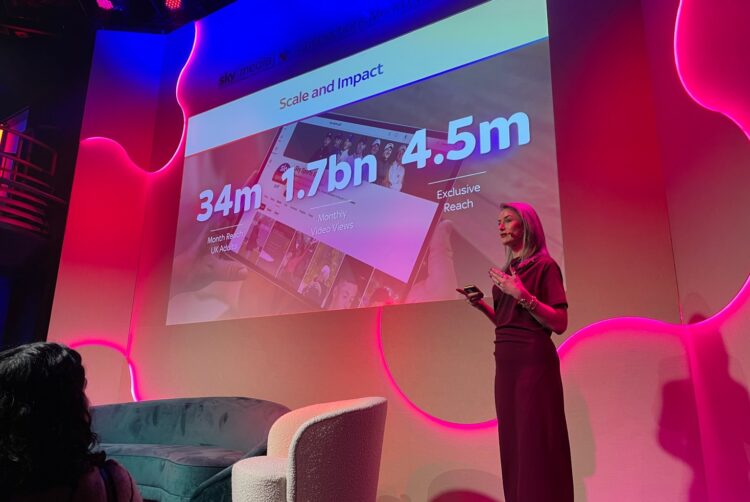
At Sky Media’s annual Showcase event on Tuesday, the broadcaster repeatedly stressed that it’s not just a TV provider, but a curator of premium content on social media platforms.
“We connect with our audiences wherever they’re paying attention,” said Pippa Scaife, Sky’s director of digital advertising, listing off the likes of X, TikTok, Spotify, Snap and Apple News. “Across all of these platforms, we are masters at building powerful communities around the premium content that has defined Sky as a broadcaster for generations.”
The mid-afternoon event was hosted at Soho’s Underbelly Boulevard, an intimate environment equipped with a live band, drinks and breadsticks that were cheekily maligned by guest speaker Michael McIntyre (more on him in a moment).
It was noticeably light on direct sales pitches, with just as much conversation around the power of creator-led content on platforms like YouTube as Sky’s own slate of news, sports and entertainment products.
The only major new programme to receive attention was the forthcoming launch of Saturday Night Live in the UK, and even this was situated as a social media opportunity, with Sky’s director of planning, Sarah Jones, calling the US show “big clip gold”.
Meanwhile, the elephant in the room — Sky’s “preliminary discussions” to purchase ITV — went without mention.
Scaife did hint at two new digital innovations for advertisers. The first is a new data solution that will allow Sky to “replicate our sophisticated AdSmart targeting across the digital ecosystem” by creating audience segments across both its channels and syndicated content, as well as “our 20m-strong YouTube audience”.
Further, Sky is evolving its Sky AdVance proposition. From Q1 2026, advertisers will be able to retarget linear audiences not just across digital video and display, but also across audio and digital OOH.
Forging partnerships
The Showcase kicked off with brief remarks from Sky’s ads chief Priya Dogra, who set the digital-first tone by explaining that Sky’s content does not merely build audiences but creates fans that coalesce into online communities.
“We moved early to forge partnerships with the digital platforms because we knew our audiences wanted to engage with our content and our brands beyond TV, in digital and social spaces,” she explained.
Why sport is every brand’s playing field — with Sky’s Pippa Scaife and Dan Cohen
Such efforts have not always gone smoothly. Earlier this month, Sky Sports axed a new TikTok channel, Halo, after just three days over criticism that the female-focused effort was sexist.
Dogra said Halo was a project “we embarked on with the best of intentions” as part of a wider effort to “engage with a new generation of young female sports fans”, but acknowledged that Sky “didn’t get it right”.
“The beauty of digital is that the feedback is instant,” Dogra laughed nervously. “And communities are vocal, brutally so. What that does is give you a chance to listen, respond, and learn, and that is exactly what we at Sky Sports did. None of this will change our commitment to innovation and our commitment to inclusion.”
Digital as the ‘front door’
When social strategies go right, they can lead to incremental audience gains. Sky claims audience reach of 34m monthly adults across its digital platform accounts, collectively generating 1.7bn monthly video views.
Of that audience, 4.5m adults are “completely unique” from Sky’s TV and VOD audience, according to Scaife.
She shared that nine out of 10 sports fans consume sports content on social media platforms, and Sky’s team of hundreds of digital and social editors is working to produce content, including original shows or clips of sports matches, “that people seek out, not scroll past”. Sky Sport’s social team alone produces over 3,000 “pieces of digital content” each week.
“We are not just a distributor, we are not just a tech partner,” Scaife continued. “Sky is a creator. What really drives our connection to our audience is our content. And nobody does content better than Sky.”
But Scaife did also promote Sky’s position as a “premium aggregator” across its digital portfolio. Sky is the UK’s largest YouTube reseller, representing inventory from the likes of LadBible and Global.
‘It’s about ease’: Sky’s ad chief on the need for simplification and collaboration
She added that Sky delivers impact and trust on platforms that “are not always synonymous with those things”, creating “pockets of brand safety” in unpredictable environments.
The same is true of sports and entertainment as it is with news, with Scaife pointing out that Sky News has more YouTube followers than any other British commercial broadcaster.
She likened Sky News’ journalists and anchors to influencers that “[shape] the national conversation”, adding that as Sky News looks to innovate, digital will be its “front door”.
Creator-centred media
During the Showcase, a star-studded panel featuring Lioness Mary Earps, comedian Michael McIntyre, YouTube head of UK sports Jonny Keogh and Sky Media’s director of client and marketing Karin Seymour agreed that the future of media is fan-led — a development that brings both opportunity and potentially worrisome consequences for more traditional players.
Keogh argued that fandom has changed in the digital age, noting that how we watch sports (such as through creator watchalongs), who we watch (increasingly women’s sport) and when we watch (24/7) have all adapted.
Nevertheless, he acknowledged that live sport is still watched primarily on linear TV. “The day that TV is dead is the day you stop rearranging your living room around the TV,” he said.
For marketers, however, “What are [fans] doing outside those 90 minutes?” becomes a key question, and Keogh argued that a strong digital presence is necessary for brands to remain relevant in consumers’ minds.
Seymour agreed, noting that Sky always seeks to incorporate digital efforts into its wider partnerships with brands.
Promoting his new Fanalysis venture (in partnership with Sky Sport), McIntyre said that “fans really are taking over”, with “anybody with talent and a passion” able to grow audiences via algorithmic recommendation on various social media platforms.
McIntyre likened algorithms to “natural selection” of content, as opposed to entertainment chosen for production by TV executives, though this obfuscates the reality that algorithms are opaque and are more likely to recommend certain types of content than others.
He added, “That’s not maybe the best news for traditional journalism, but this is what’s happening. [Fans are] clued up, they’re passionate, they have enormous personalities, they are being found in an amazing way online.”
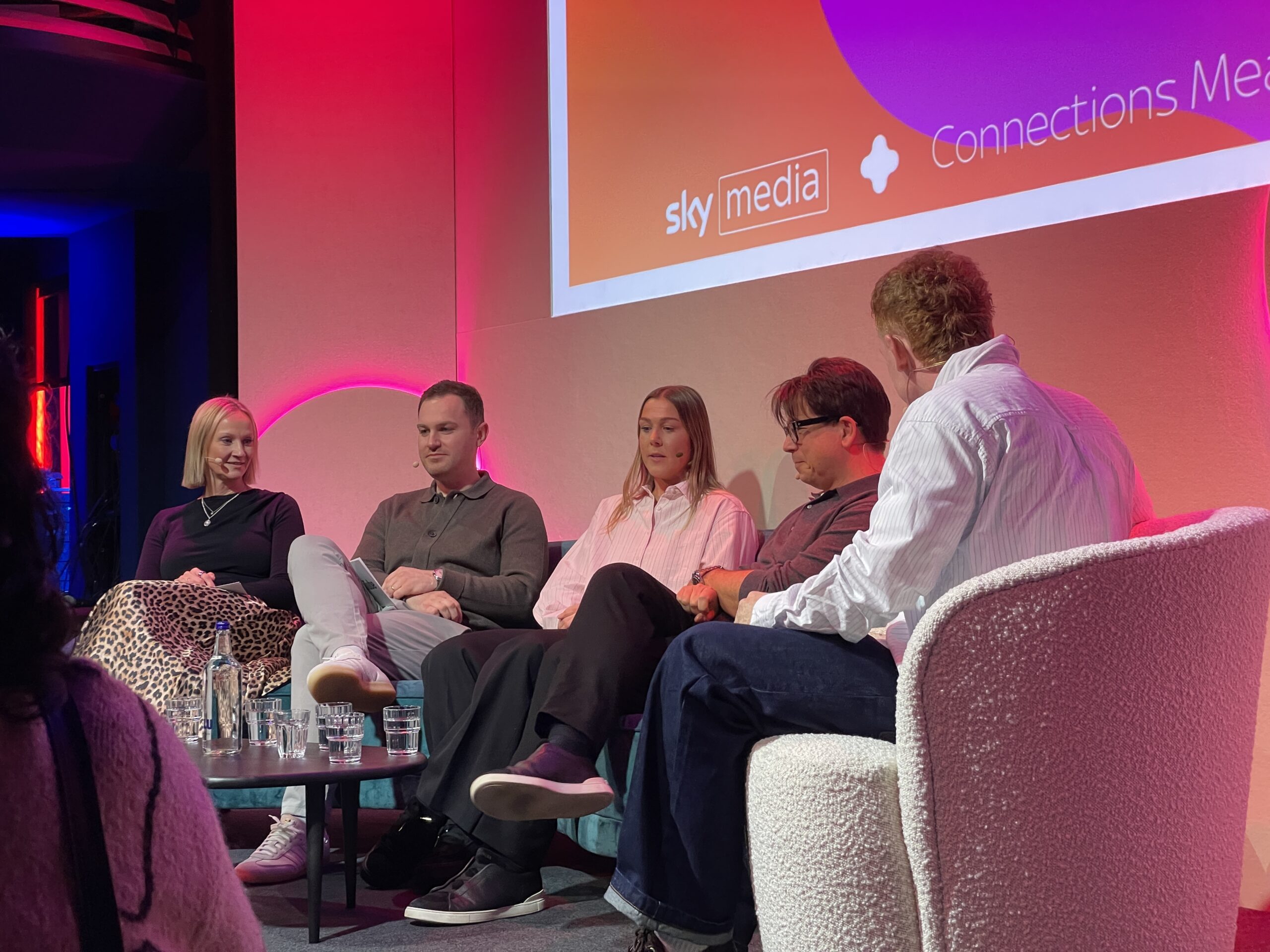
L-R: Seymour, Keogh, Earps, McIntyre, Thomlinson
McIntyre also caused nervous laughter aplenty by questioning YouTube’s ad experience in front of Keogh, asking rhetorically whether everyone skips ads on YouTube when given the opportunity.
“I never not skip,” McIntyre said. “Who’s watching something on YouTube and the ad comes on, and they go, ‘I’ll settle in for this for a couple of minutes?’ You should put all the advertising at the bottom, lower-right-hand corner, around the skip button.
“I’m saying all the wrong things, aren’t I?”
With much of the discussion centred on the creator economy, Seymour concluded by reminding attendees that fandom cannot exist without quality content.
“Fans also need the premium content that we invest in,” she said. “We spend millions of pounds in producing it, in investing in sports rights and making sure it’s broadcast in the best way; that we can then clip up and interpret for fans, that we can spread out across the different platforms.
“That’s really, really important because if we’re not investing in the content, there is not that stuff on the social platforms for us to be using.”