



The Future of TV Advertising Canada 2025: Key takeaways
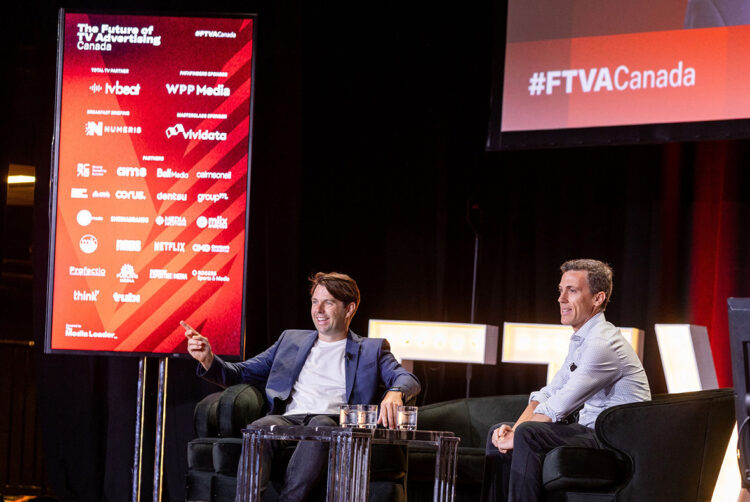
The Future of TV Advertising Canada 2025
Last week, top executives in the Canadian TV market and beyond gathered at Adwanted and The Media Leader‘s The Future of TV Advertising Canada in Toronto to discuss, among other key themes, how marketers can gain more bang for their buck and working across the funnel to deliver impact in both the short and long term.
Couldn’t make it? Here are the top insights you need to know and share with your team.
To understand even wider industry trends and themes, the must-attend is the tentpole The Future of Advertising Global during 9-10 December in London.
Innovation in audience measurement is accelerating
Global streaming giants are becoming part of the established TV measurement community.
Amazon Prime Video has joined Numeris and Tyler James, head of live sports sales at Amazon Ads Canada, acknowledged that it was because media buyers made it clear that this was table stakes if they wanted to win big with their live-streaming hockey rights.
Meanwhile, Enhanced TAM will combine set-top box and later digital viewing data to complement the Numeris panel. New Numeris (and NLogic) president and CEO Alicia Olson-Keating views this as the basis for a replacement currency.
There is a serious push towards creating a single cross-media measurement solution for Canada, backed by buyers, with media owners also promising collaboration. It was clear from The Future of TV Advertising Canada that Olson-Keating is going to be an important change agent.
Media and TV working for buyers, despite tough conditions
Hilary Borndahl, founder and CEO of MMM provider Miix Analytics, acknowledged that “all CMOs are fighting for every single dollar amidst disruption and change”, but the good news is that media is working harder for Canadian brands than it was 10 years ago.
Miix figures show that, on average, media contributes to 8% of sales for Canadian brands — double what it was in 2015. Canadian advertisers are getting CAD1.26 back for every dollar invested in media, with linear TV providing a return of CAD1.55 to the dollar and connected TV achieving CAD1.34.
Linear TV contributes half of the profit derived from media despite receiving only 42% of the total Canadian media budget allocation. “Linear TV is not dead — it is working very, very well for lots of brands,” Borndahl declared.
Return on investment has also improved, she said, partly because buyers have become better at moving money out of a channel that has become “saturated” and into another that is not.
Andrew Curran, CEO at Lindt Canada, revealed how his brand prioritises TV and long-form video after a five-year, multi-market study showed that TV was the best lever for growth at Lindt.
Deborah Gurofsky, senior vice-president and managing director at Media Pulse, offered a devastating take-down of social media. She argued that she and millions of social media users are regularly tempted to buy products from unknown brands (especially beauty products) that they soon regret buying.
She characterised this as “doomscrolling that leads to doomspending”.
For Gurofsky, these sales are akin to one-night stands that leave consumers in regret in the morning and established brands should not want to be seen in the same environment (social media) if they want to protect their premium reputations.
She contrasted this quick-sales environment with brand-building on TV — something that she described as more like a lifetime love affair.
Having asked the audience to finish some well-known advertising straplines — such as “Maybe she’s born with it…” — Gurofsky suggested that the reason everyone knows them is because they were brought to us with TV ads, where real memories are created.
TV has to become better product and better partner
While praising TV as a lever for growth, Curran had some words of caution for the industry: his accolade for best media partner goes to Google because of its proactive, collaborative approach.
He cited Google’s long-term investment in multi-market testing to show the impact YouTube could have alongside TV for Lindt. “I would encourage all media owners to take the same collaborative approach and invest upfront to help clients,” he said.
The “Google is a close business partner, whereas we have never even met the broadcasters” message is one that has been aired before at The Future of TV Advertising Canada events. Sometimes it is because the agency is viewed as the interface between brand and media owner, but it looks like broadcasters have taken note of how Google goes way beyond “selling”.
Meanwhile, Robert Farazin, founder and CEO of TVBeat, observed that the media budget allocated to broadcasters is falling faster than their audiences and that this suggests there are barriers to investment beyond reach. TV needs to be easier to buy and sell, for instance.
He believes broadcasters should focus on turning total TV (linear broadcast plus broadcaster streaming) into a truly unified audience for buyers. In addition, they can attract new demand by digitising linear broadcast ads so they can be bought as programmatic guaranteed spots via demand-side platforms.
Matt McGowan, senior vice-president, business solutions, at Bell Media pointed out that streaming growth is helping to offset declines in linear, but digital could be merchandised better.
Alastair Taylor, CEO of Publicis Media Canada, also suggested TV has a “product” problem and is not easy enough to buy. “In platforms, it is easy for our teams and clients to dial spend up and down, but it is much harder if you want to increase TV spend.
“My advice to the TV industry is to find a way to make it easier for people to buy more TV, because it is more complicated to buy TV than your peers.”
Some broadcasters no longer hide their fear
This was a remarkably frank conference, whether it was agencies discussing the pros and cons of principal media trading or brands defending themselves against suggestions that they under-invest in TV.
Perhaps the most candid of all public remarks came from Patrick Jutras, chief advertising revenue officer at Québecor.
Asked by panel moderator Justin Lebbon if he felt Canadian advertisers had fled linear broadcast before the audiences had, he said “totally”, before admitting that he did not know the reasons.
Jutras stressed the continued strength of linear across the French-Canadian market. Noting the high costs of producing tentpole Saturday night shows like The Masked Singer, he declared: “We are fortunate to be part of a vertically integrated company [also selling broadband and mobile] because otherwise our media business would be in real trouble.”
This is the market where a major broadcast sales house that is not part of a telecoms company — Corus Entertainment — has spent the last year working with creditors on a capital and debt plan. Barb Mckergow, senior vice-president, ad sales at Corus, agreed that Canada’s media buyers has been very quick to abandon linear TV.
“Maybe there was a perception issue around it and we could have done a better job at demonstrating the benefits of TV,” she noted, adding that there’s a need to convince US media buyers to consider Canadian media owners more.
Hisham Ghostine, chief revenue officer at public broadcaster CBC, echoed a general sentiment among broadcasters that they need to collaborate more to offset competition from tech platforms, painting a picture of market uncertainty and high stakes.
“Fifteen years ago, everyone was making enough money. But today, the [future of the] whole [local] industry is at stake.”
He made a personal commitment that CBC would do more to ensure broadcasters get around the table and fight back.
Part of the answer is more digital. It was already noted how select Bell linear inventory was made available via Amazon DSP earlier this year as an additional demand source.
McGowan noted: “It’s on us to adapt how we work and engage. It is clear the audiences are still there [for broadcasters]. We are firing more impressions today than a couple of years ago, but they are in different channels.”
AI planning good for media and TV — if there are guardrails
Data from AI media software vendor Futuri suggests that if large language models (LLMs) are used as the input for media plans without human oversight, linear TV and radio get left out most of the time.
Their report was based on 20,000 media plans created using eight LLMs. Futuri concluded that LLMs base their assessments on the knowledge they have ingested (largely from the web) and because digital media has more public record data to demonstrate its performance.
So, while connected TV, over-the-top and YouTube appeared on plans, linear TV did not; while streaming audio made it on to plans, radio was virtually ignored.
The dangers of digital bias were largely acknowledged by a panel of media buyers during the pre-conference Pathfinders event, with the conclusion that we still need human guardrails on AI media plans and that broadcasters should start presenting more of their own performance results in a form that LLMs can digest.
At the main conference, Taylor also argued that the opposite could happen. “AI could overcome some of the bias that exists among planners,” he suggested.
Cathy Collier, CEO at OMD Canada, agreed. “I think we are missing some metrics we can feed in [to AI planning tools], with attention being one, which will benefit radio as well. There will be better inputs and better outputs.”
She believes TV will get more credit for what it achieves when AI has a greater role in planning.
Robert Jenkyn, president at Horizon Media Canada, stated: “I don’t think AI [enabled planning] will be detrimental to TV. In fact, it will be a lift to the TV industry. AI is only as good as the data it is surfacing and if the AI sees campaign data [that is favourable to TV], that will enhance linear TV, for sure, as well as other media.”
AI will make media agencies better places to work
In terms of AI use, for Kevin Johnson, CEO and president at WPP Media Canada, his ambition is that humans offload functions they no longer need to perform — but that does not mean media plans will leave the building without human oversight.
Collier is hopeful that once the high-value strategic elements of a campaign have been orchestrated, manual tasks can be taken away from humans.
Johnson earned applause when he recalled his own experiences growing up in the industry. “I would have always rather been building out creative ideas and brainstorming than doing discrepancies. I hated that! I didn’t want that to be part of my responsibility, so 25 years later there is a bunch of stuff we don’t want our people to do.
“So the intent is that we don’t want people to do things that are not adding value to our colleagues or their futures.”
Collier reckons adoption of AI will make media agencies a more attractive place to work: “Young people will see agencies as vibrant places to come — it will help us with talent.”