



The Trade Desk promises neutrality with TV OS
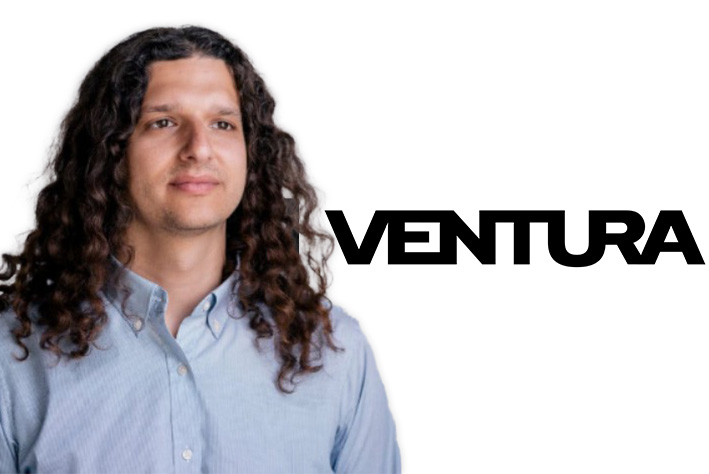
Demand-side platform (DSP) The Trade Desk has promised it will never own content services as it prepares to unveil Ventura TV OS later this year.
Matthew Henick, senior vice-president of Ventura at The Trade Desk, has also pledged the company will not hold any inventory on the smart TV operating system (OS), fulfilling its commitment to avoid conflicts of interest.
Ventura seeks to revolutionise the smart TV OS marketplace by sharing more revenue with TV original equipment manufacturers (OEMs) and content publishers.
In an interview with The Media Leader, he confirms that Ventura welcomes competitor demand sources, so there is no question of using its control of the OS to favour its own DSP.
Henick believes CTV and smart TV OS platforms that own content or sell inventory cannot be considered neutral players and carry the risk of bias. Search and recommendation could favour some content services over others, for example.
“Publishers need to be there [to maximise their distribution], despite those platforms competing directly with them,” he declares, adding that there is no incentive for Ventura to steer viewers towards any content or inventory.
Even home-screen ad inventory will be handed to TV OEMs to control — one of the ways in which Ventura intends to improve the business model for device makers.
Sharing more data
Henick is confident that this neutrality will persuade media owners to share data with Ventura that they would otherwise hold back, fearing that it could be used to help rivals understand content strategies and rights values.
One key benefit will be more metadata from content catalogues within broadcaster, subscription VOD or advertising-supported VOD apps. This can be used to provide universal search and recommendation that help consumers navigate the vast TV landscape in one place.
Content recommendations will be better for consumers and there will be more signals to help advertisers target audiences, Henick reckons: “This is better for publishers too.”
Ventura was announced in November 2024 and will appear in the US first. OEMs will lead the decisions on which other markets are suitable for roll-out, but Henick says the platform could be used anywhere that The Trade Desk operates.
So the ambition is for global reach, ultimately, and the OS is expected to appear on TV sets across the price range. Other sectors are being explored as a home for Ventura, including hospitality and airlines.
Ripe for shake-up
Henick paints a picture of TV OEMs working to thin margins, retailers taking low margins on the devices they sell and advertisers determined to increase their working media in the connected TV (CTV) space, where less than half of their ad investment is reaching even the largest content owners.
He suggests the current business model is not sustainable and the CTV market is ripe for a shake-up.
“The TV manufacturing business is challenged and some OEMs have negative margins,” Henick explains. “One solution for them is to move into advertising and one way to do that, while staying in control of that business, is to build their own advertising and content teams.
“That is not practical for most OEMs. If you don’t have the resource to launch content services or build your own OS, you must look at other options, one of which is to take free software from global tech firms — or even get a one-time device bounty — in exchange for giving up potential advertising revenue share.”
Ventura will give OEMs a much better deal, Henick argues. They keep the customer relationship and take a meaningful share of ad revenue on third-party streaming (including for free ad-supported TV) covered by revenue-share agreements. OEMs also take a cut on content rentals and purchases covered by revenue-share agreements.
The aim is to bring advertisers and publishers closer together, thanks to The Trade Desk’s focus on streamlining the CTV supply path. Among other things, this encompasses the use of OpenPath (providing a direct connection between buyers and sellers) and UID 2.0 (a new approach to identity).
Henick adds: “We look at 17m [ad buying] opportunities every second and only bid on a small handful because we are discerning, ignoring anything that is not transparent or does not appear trustworthy. We ignore anything which does not look like the best place for advertisers to be.”
The next TV battleground isn’t ratings — it’s discoverability
Maximising working media
For Henick, the success of Ventura will be partly judged by how much working media it delivers for each dollar spent: “We think publishers will receive the highest revenue [per dollar spent] on our platforms.”
Streaming service Tubi was one of the media owners (alongside Disney and Paramount) that openly backed the Ventura initiative last year as it looked forward to a better CTV supply chain.
Paul Cheesbrough, Tubi’s CEO, said: “As viewers shift to streaming, it is imperative that advertisers can find their audiences with precision and put as much of their campaign spend to work as possible.”
Disney also hailed the drive to create more efficiency, as well as a more enjoyable TV experience.
Discussing the presence of other DSPs on Ventura, Henick says: “We have always welcomed fair competition, because we think we win our fair share [of bids]. We encourage all our publisher partners to have multiple demand sources.”
The Trade Desk has concluded that, if it wants to shape the CTV supply path end to end, it needs to control the OS.
“Through the history of computing, we have seen that power and leverage sits at the OS level,” Henick observes. “Often, industries have only discovered that after something bad happened.
“Look at iOS and Android in mobile [how they took the higher-value functions from mobile network providers and device manufacturers].”
He believes Ventura can help OEMs keep control of their own destiny.
When it comes to the consumer experience, the big question is whether there is room for another TV OS in the market, given the competition.
“Nobody is basing their television-buying decision on the OS,” Henick suggests. “It is about screen size and price. That should not be the case. Perhaps that says existing OS providers are not doing the job they should be.”
News, analysis, comment and community — Join The Media Leader