



‘We want to do different things’: Inside The Observer’s ‘luxury’ commercial strategy
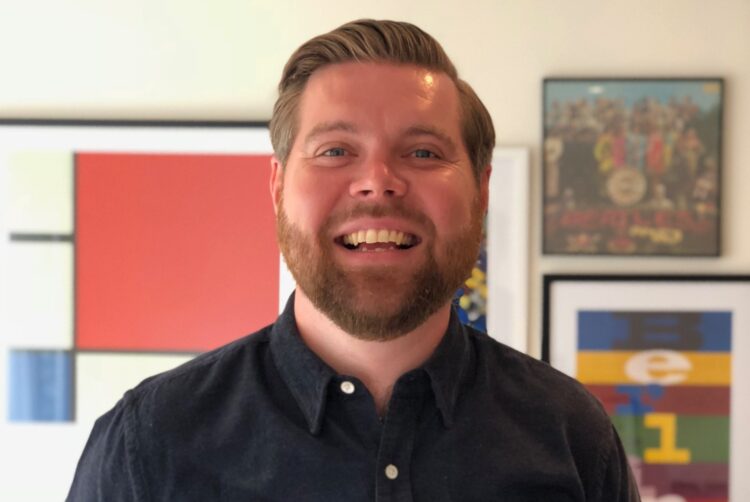
The Media Leader Interview
The Observer‘s new commercial chief speaks about why he’s prioritising a “luxury” experience for clients, and the effort to diversify the title’s fledgling product offering.
The Observer is open for business with a broader set of potential clients and partners under its new ownership than it might have been at The Guardian.
“We can play in places that we might not have previously been able to. We can talk to clients that potentially were not able to talk to The Guardian,” Mike Duffy, The Observer‘s recently-hired chief commercial officer, tells The Media Leader.
While he reassures the business still has “policies in place” to work with “the type of people that align” with its content and audiences, Duffy says: “We want to do different things.”
In its first year under Tortoise’s ownership, the title has sought direct relationships with advertisers and partners. Its website is entirely devoid of programmatic advertising, though Duffy says he is “considering” developing a programmatic strategy that could take shape in Q2.
Both the site and print edition have been intentionally designed as a “luxury” space for brands, with low ad loads that reduce clutter. Leadership at The Observer, including Duffy, has no interest in “interrupt[ing] audience flow”; Duffy claims subscribers spend four and a half hours with the title each week, with long dwell times driven by a long-form journalistic output.
The relative lack of ad inventory has meant the commercial team can afford to be selective with its partners and pitch them a high-quality ad environment.
“We’ve turned away some partners in the past couple of months because they don’t really qualify for that high-end, luxury value exchange,” Duffy says. Clients who have made the grade? Porsche, Chanel, Rolex, Omega, Le Chameau, Bank of America and Santander.
Of course, The Guardian‘s progressive audience may well also encompass audiences for Swiss watches and sports cars. But The Observer is planting its flag in the high-end space. Speaking last week amidst the “final throes of Davos planning” (co-CEOs James Harding and Emma Sullivan, as well as business editor Barney Macintyre, will be in attendance), Duffy shares he has “about 20 meetings” planned during the World Economic Forum with potential commercial partners.
Diversification is key
Duffy joined the outlet in mid-October in the weeks leading up to the launch of The Observer‘s new digital subscription offering, website and app. He previously worked for six years at Time magazine, most recently as its VP and head of EMEA, and earlier in his career was EMEA sales director at Forbes and global client director at the Financial Times.
He viewed the opportunity as “too good to turn down”; a chance to build a new commercial team from the ground up, taking a “legacy media brand” — the world’s oldest Sunday newspaper — and “refresh[ing] it for the modern media landscape”.
Observer launches digital subscription service with new website and app
Duffy’s appointment came after a tumultuous start to building the title’s commercial team. In April, soon after the closing of Tortoise’s acquisition of The Observer had completed, its first director of advertising, Guy Edmunds, quit the role after just a handful of days on the job.
The commercial team was subsequently “reformatted” over the succeeding months. Current director of advertising Nick Territt, who joined at the same time as Duffy, leads an ad agency trading team. Meanwhile, Alistair Smith and Irina Sidorova have been brought on to lead commercial audience data insights and subscriptions, respectively.
“I want to build a world-class commercial team,” Duffy says. “We need to be adaptable, agile. We need to be client-facing and proactive in the media world. The same way we need to meet our audiences where they are, we need to be meeting our clients where they are.”
Sales reps will be given a growing suite of commercial products, with success hinging on “the diversification of our platforms,” according to Duffy. Tortoise, which specialised in podcasts and newsletters, was never profitable. But The Observer also has a weekly print edition, an app, a digital subscription, and a fledgling video product dubbed Observer TV.
Run by former Sky News political reporter Tom Larkin, The Observer‘s video strategy aims to encompass video podcasting and documentary filmmaking, opening up potential for commercial partnerships.
Meanwhile, the title is also actively building a commercial studio division, dubbed Studio 1791 (after the year the paper was founded), which will operate similarly to The Guardian‘s Guardian Labs or The New York Times‘ T Brand Studio.
“We want to create a studio that seamlessly works with the ad agencies’ trading teams that could then work across all the creative briefs,” Duffy describes. “For me, for the future, Observer TV, our events business, our international ambitions are going to be really crucial.”
In search of profit
Duffy still has room to hire three or four more people for his growing commercial team. Current listed vacancies include a head of print sales and multiple roles supporting its subscriptions business.
But given all the investment — and Tortoise’s continued failure to turn a profit — how long of a leash does he have before The Observer needs to get into the green?
“We’ve got a solid set of investors behind us,” Duffy says. “We’ve got a decent runway.”
He calls the team energy “ferocious” and states that his intention is to “make this a success as quickly as possible”.
“I came in during phase two of the acquisition”, he continues. “Until the end of November, we didn’t really have any commercial digital platform on a website or an app. Now that diversification of that suite of products is in play. That means we can diversify our client portfolio.”
Richard Furness on building a new Observer that’s ‘proudly a second read’
While Duffy claims The Observer has “strong” and “growing” subscription and digital audience figures, he declines to share details. Early readership, he insists, is “good enough”, with The Observer targeting audiences “in that space between The Economist and the FT.”
The Tortoise DNA is thus still firmly rooted within the new-look Observer. The title’s leadership is not keen on competing in the “crowded environment of headlines” but rather in “finding stories that take some time”.
Is The Observer a magazine? A newspaper? Both? Neither? It’s an “interesting place to be” for a commercial leader, says Duffy.
“I think if you asked a lot of the newspaper marketers who have got dailies, I think they’d say they’d probably prefer to have a Sunday newspaper, if print’s going to keep on declining.”