



What a Paramount takeover of Warner Bros Discovery would mean
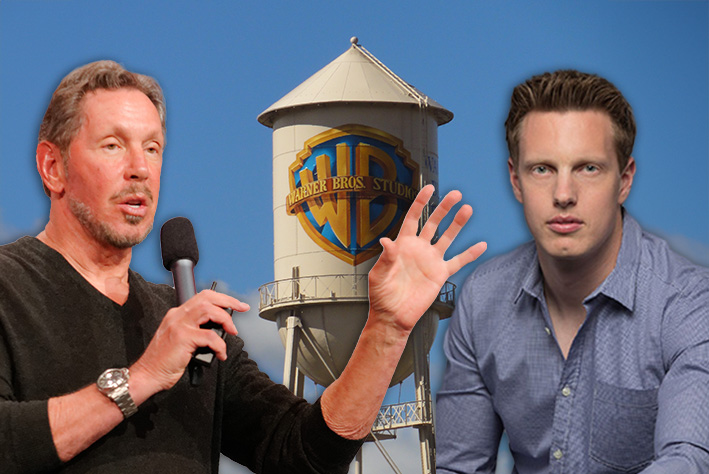
Paramount Skydance is reportedly working on an all-cash bid to purchase the entirety of Warner Bros Discovery (WBD) in a deal that would dramatically reshape the global media market.
This is despite WBD previously announcing its intention to split into two companies next year.
The deal, should it occur, would combine some of the world’s largest media properties under one roof. Paramount operates the likes of CBS, MTV, Nickelodeon and Bet, as well as streaming service Paramount+. Its film studio, Paramount Pictures, owns major franchises such as Mission: Impossible, Transformers and Star Trek.
WBD, meanwhile, owns CNN and TNT, as well as HBO and streaming service HBO Max. Its own film studio has had a record-setting year and has major properties including Harry Potter and DC Comics.
Both companies, importantly, hold a large number of sports rights.
Analysis: Consolidation in streaming?
WBD has already announced plans to become Warner Bros, a streaming and studio company comprising its film properties and streaming service HBO Max; and Discovery Global, encompassing CNN, TNT Sports and Discovery.
Current CEO David Zaslav is meant to lead the former, while chief financial officer Gunnar Wiedenfels would become CEO of the latter.
The move to split comes just three years after WarnerMedia merged with Discovery to become WBD. As part of that deal, the conglomerate was saddled with debt, much of which was inherited from WarnerMedia.
While WBD has whittled the debt down from $53bn to $38bn in the past three years, the pressure to do so has resulted in cuts and unpopular cancellations of major properties, such as the short-lived CNN+ subscription streaming service.
Zaslav previously warned that the entertainment market would likely shift in this direction. At last year’s Allen & Company Sun Valley Conference, he told CNBC: “I think probably over the next year or two you’re going to see some real consolidation, whether that happens from companies buying each other or jointly going after streaming together.”
The new Paramount Skydance is itself the result of an $8.4bn acquisition completed last month. Since the change in ownership, the company has announced a $2bn cost-cutting effort.
According to Mike Proulx, research director at Forrester, should the acquisition occur, it “would redefine the streaming landscape through further consolidation”.
He suggested that a new streaming service, created by combining HBO Max with Paramount+, would “have the scale to better compete against Netflix and the unified Disney+ and Hulu library”.
While this might be good for consumers in the form of cost savings, it would reduce marketplace choice, Proulx warned.
He added: “What’s clear is that, as the streaming market matures, it’s looking a whole lot like the OG television industry — all the way back to when there were just a few big networks and studios.”
Big Tech concentration
What is different, however, is the make-up of the consolidated media ecosystem’s leadership, with tech moguls purchasing and reshaping established media properties.
Jeff Bezos’ ownership of The Washington Post and Elon Musk’s purchase of Twitter, for example, have shown how some of the world’s wealthiest are able to spend peanuts relative to their extraordinary fortunes to own information channels that influence international conversation.
Musk is a friend of Larry Ellison, the Oracle co-founder and CEO who briefly became the world’s richest man this week following a sudden 30% increase in the cloud giant’s share price. Ellison’s son, David, now runs Paramount after his father helped finance Skydance’s acquisition of the company.
While no single shareholder can outvote David, Larry’s 27.5% vote share means his son must get his approval on anything related to budgeting and investments.
Skydance deal approved as tumultuous times at Paramount continue
The Ellisons’ ownership of Paramount is also likely to lead to deals within the family: Oracle is already in talks to strike a cloud deal with Paramount Skydance worth $100m.
Oracle has also regularly emerged as a potential bidder for TikTok, although the congressionally mandated sale of its US business has continually been delayed by Donald Trump’s administration.
The latest move has prompted Jake Dubbins, managing director at independent agency Media Bounty and co-chair of the Conscious Advertising Network, to express alarm.
“It speaks to the concentration of information into a very small number of hands,” he told The Media Leader, calling the trend “probably not a good thing”.
Trump alignment
The Ellisons are widely understood to be friendly with Trump. Larry was an early supporter of Trump’s 2016 campaign and this summer was reported to have made several trips to the White House to meet with the president.
Consolidating several major US-based news outlets under their ownership could thus pose a risk to journalistic standards and a conflict of interest between the Ellisons’ political interests and independent reporting.
David has already sought to acquire popular right-wing Substack The Free Press and insert founder Bari Weiss — a columnist who has never run a newsroom — as head of CBS News.
The Ellisons’ friendship with Trump could, however, make the deal more likely to surpass regulatory scrutiny.
Tom Harrington, head of TV at Enders Analysis, told The Media Leader that “theoretically” the deal should have many more regulatory hurdles to overcome than the Paramount-Skydance deal, particularly given the overlap in services between Paramount and WBD.
But he remarked: “As always, favourable relationships in government can at least speed up the process.”
Downstream impact
While it’s not yet clear how precisely the Ellisons would finance a purchase of WBD, it’s almost certain that Larry, now personally worth over $387bn, would underwrite the effort. As The New York Times reported in April: “There is not much left for Mr Ellison to buy that would seriously dent his wallet.”
WBD currently has a market capitalisation of around $40bn (helped by a 29% increase in its share price following news of the potential acquisition). Including its debt, the company would presumably cost somewhere in the ballpark of $78bn.
How Paramount is building simplicity and scale — with Lee Sears
According to Harrington, the most significant downstream impact in terms of media output would be that the merged entity would likely constrain supply by creating less content.
“Although this is the direction that the sector is heading anyway, after years of oversupply,” he added. “It is therefore rational: combining these two companies will promote massive cost savings that will theoretically lead to sustainability, which is not currently the case.”
Still, Harrington warned of the disruptive nature of major acquisitions.
“If this was to happen, it wouldn’t be for years, meaning that the cloud of uncertainty that has hung over Warner Bros, Paramount and Discovery for years due to previous M&A machinations will continue,” he said.
“This is obviously a poor environment for longer-term strategic planning and investment, and will only intensify the distance between these companies and those that haven’t had to operate in a constant climate of precariousness.”